Understanding Galungan and Kuningan: The Heart of Balinese Culture
If you visit Bali during the middle of the year, you will immediately notice a beautiful change. The streets fill with rows of towering, curved bamboo poles called penjor. These decorations hang gracefully over the roads like green and gold waves. At the same time, the gentle scent of incense drifts through the warm sea breeze.
For the local people, this festive time is much more than a simple holiday. Galungan and Kuningan represent the most important spiritual events of the year. Together, they celebrate family, community, and the ultimate victory of good over evil.
Balance in the Universe
To truly understand these festivals, it helps to understand two simple concepts that guide daily island life. Specifically, the community focuses heavily on Dharma and Adharma.
-
Dharma represents goodness, truth, order, and cosmic balance.
-
Adharma represents chaos, ignorance, and spiritual imbalance.
Balinese believe that these two forces are constantly at war inside the human heart. Therefore, Galungan marks the exact day when goodness wins the battle. It is a time for people to clear their minds and reset their lives. Consequently, this ritual brings positive energy back to their families and villages.
Fall of the Tyrant King
The historical and spiritual roots of Galungan come from a famous island legend. This story details a powerful, wicked king named Mayadenawa.
[ King Mayadenawa ]
(Forbids people from praying)
│
▼
[ The Island Suffers ]
(Crops dry up and sickness spreads)
│
▼
[ The King is Defeated ]
(Lord Indra wins the war for the people)
│
▼
[ Galungan ]
(Celebration of freedom and victory)
According to the legend, King Mayadenawa had magical shape-shifting powers, but he also had a massive ego. He declared that he was greater than the gods. Consequently, he banned the Balinese people from praying or making offerings.
Because of his cruelty, the island fell into deep darkness. The rice fields dried up and terrible sickness spread through the villages.
Eventually, a powerful god named Lord Indra stepped in to help. He descended to Earth with a divine army to fight the wicked king. Mayadenawa used his magic to transform into a wild boar, a rock, and a tree.
Finally, Lord Indra defeated the tyrant king beside the Petanu River. The grateful villagers celebrated their newfound freedom on a day they called Galungan, an old word that means victory.
210-Day Balinese Calendar
You might wonder why these holidays do not fall on the same dates each year. This variation happens because Bali uses its own traditional calendar called the Pawukon system. This calendar operates on a continuous 210-day cycle.
[ Day 1: Galungan Day ] ──────► [ Day 10: Kuningan Day ]
(Spirits arrive on Earth) (Spirits return to Heaven)
Because this calendar is shorter than the western calendar, the ten-day festival season happens roughly every seven months. This unique timing means you can sometimes experience Galungan twice within a single western year.
Ten-Day Festival Timeline
The entire holiday is a step-by-step journey spread across ten days. Each specific day requires different duties from the community.
| Key Day | What It Is Called | What Families Actually Do |
| 3 Days Before | Penyekeban | Families store green bananas in large clay pots to help them ripen quickly. |
| 2 Days Before | Penyajaan | Women bake bright, traditional rice flour cakes, testing their patience over hot stoves. |
| 1 Day Before | Penampahan | Men prepare delicious community feasts, while families work together to put up their bamboo poles. |
| Day 1 | Galungan | Worshippers dress in beautiful white clothes and visit village temples to welcome ancestral spirits. |
| Day 2 | Manis Galungan | A joyful day completely dedicated to resting, visiting relatives, and spending time together. |
| Day 10 | Kuningan | Families make special yellow rice offerings in the morning before the spirits return to heaven. |
Meaning of the Penjor
The beautiful bamboo poles you see on the side of the road are not just holiday decorations. In fact, each pole represents a tiny model of a mountain and the gifts of nature.
( Curved Tip: Peak of Mount Agung )
│
▼
[ 🌾 ] ─── Beautiful Palm Leaf Ornaments
│
▼
[ 🥥 ] ─── Fresh Bananas, Coconuts, and Crops
│
▼
[ 🧺 ] ─── Small Woven Offering Shrine
│
▼
( Base: Rooted Strength of the Earth )
-
Curved Top Architecture: This specific bend at the summit mirrors the physical contour of Mount Agung. Locally, the community treasures this landmark as the most sacred mountain on the island.
-
Abundant Earth Offerings: Families securely tie fresh coconuts, bananas, sugarcane, and root vegetables to the central bamboo trunk. Consequently, this vibrant decoration serves as a direct thank-you to nature for providing sustenance.
-
Woven Bamboo Shrines: Near the base of the pole sits a small, handmade ritual box. Worshippers regularly place fresh blossoms and burning incense inside this container to pray for continued prosperity.
Golden Farewell at Midday
The grand celebration ends on the tenth day, which is known as Kuningan. The name comes from kuning, the Indonesian word for yellow, which is the sacred color of the day.
On this morning, families cook special yellow rice using fresh turmeric root. Yellow is a sacred color that symbolizes deep gratitude, respect, and divine blessings.
Worshippers must finish all their prayers and temple visits before 12:00 PM. According to Balinese tradition, the spiritual gates close precisely at noon. At midday, the ancestral spirits say their final goodbyes and ascend back to heaven. The afternoon then turns quiet and peaceful, signaling that balance has been restored to the island.
Experience the Little Bali at Mari
Did you know that our physical sanctuary is built upon these exact sacred symbols?
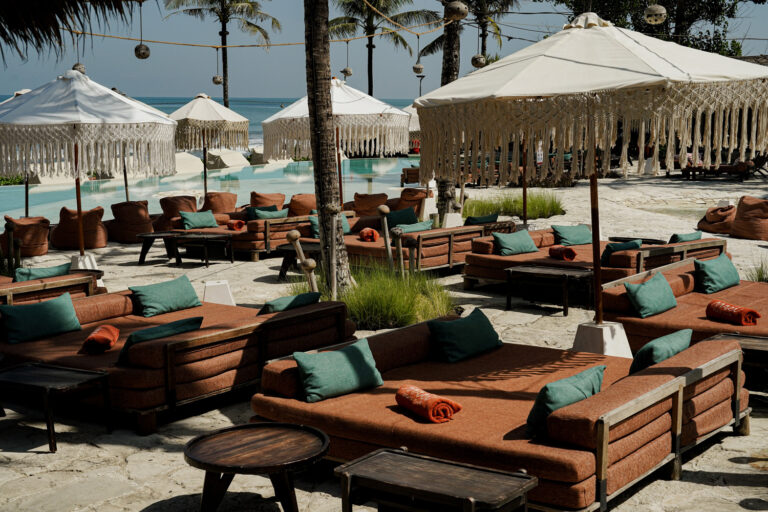
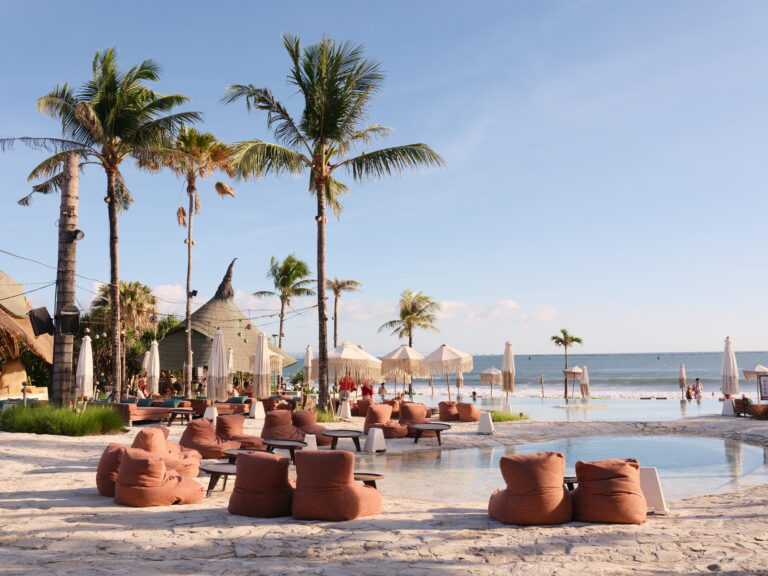
When you relax beneath our sustainable bamboo dome, you are sitting directly inside a living architectural tribute to Mount Agung. The flowing design mirrors the very contours of the holy peaks celebrated during the holiday.
Therefore, we invite you to experience the full depth of this beautiful Balinese philosophy firsthand. Join us on the beachfront lawn for our weekly Melayah: The Balinese Dance Roots gathering. Every Thursday evening at 6:00 PM, classical choreography and raw heritage come to life right at the ocean’s edge. Settle into a premium daybed, enjoy the sunset, and discover the true soul of the island.